
Two Sour Brown Beers
I started really digging into barrel aged beers when I was brewing at Pizza Port in 1997. Once I settled in and got comfortable with the brewery and operations, I turned my attention to how I could approach the production of a beer like Rodenbach (an oud bruin from Flanders, Belgium). Rodenbach had really captivated my attention and pulled me in as it wasn’t produced from a spontaneous fermentation. Since we didn’t operate a brewery with a cool ship (open air shallow cooling pan) any sour beer would need to be a hybrid with standard fermentation followed by acidification of the beer through micro flora.

Traditional Coolship in Flanders
Like many American brewers at the time, I was limited on the amount of information that one could access about these beers. Luckily I had been gifted a doctoral dissertation on the production of Rodenbach and the sour ales of Flanders. It was an awesome read to say the least and it guided so many of my choices.
Cuvee de Tomme was the first beer up and in the earliest of the early days quite the beer. It started with a Belgian Quad (Today still produced and known as Judgment Day). Post fermentation the beer was racked into used bourbon barrels where it married some sour cherries from New York State and some Brettanomyces (wild yeast) strains.
Fun fact, the same sour cherries are being used in the production of our 20th Anniversary Duck Duck Kriek that is being released on May 9th, 2026.
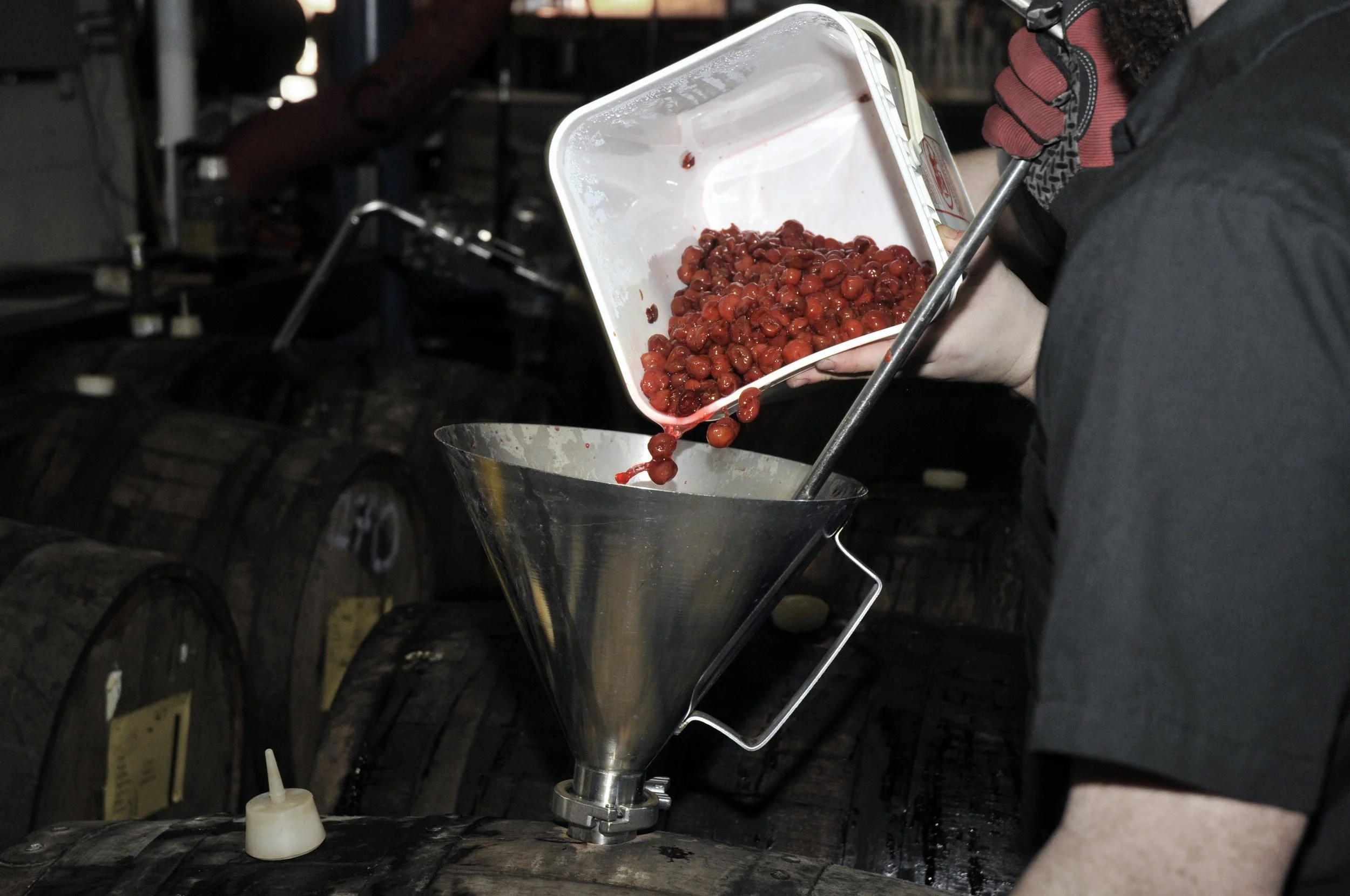
Adding the sour cherries to the barrel
The resulting beer spent about 1 year in the oak barrel and when it was first released in 1999 likely one of the first intentionally sour beers produced in San Diego. The beer was massive in so many ways and the depth of flavors ran the gamut from Port Wine to Cherry Bitters. It was incredibly well received and stoked the fire to keep going. It earned a silver medal in 2003 and 2004 at the Great American Beer Festival for Experimental Ales and Lagers. To this day, I’m not sure how if a beer wins a medal it’s still considered Experimental but I digress.

Original painting by Sean Dominguez
Art wise, Cuvee de Tomme has always had Sean’s thumbprint squarely on the label. He chose to explore a Salvador Dali like bending of time and space while incorporating oak and cherries. It was one (if not the only) label that we carried over from Pizza Port to The Lost Abbey when we opened the doors in 2006. We haven’t released a batch of Cuvee de Tomme in almost 10 years so it’s probably time we think about getting that back on the calendar as well.
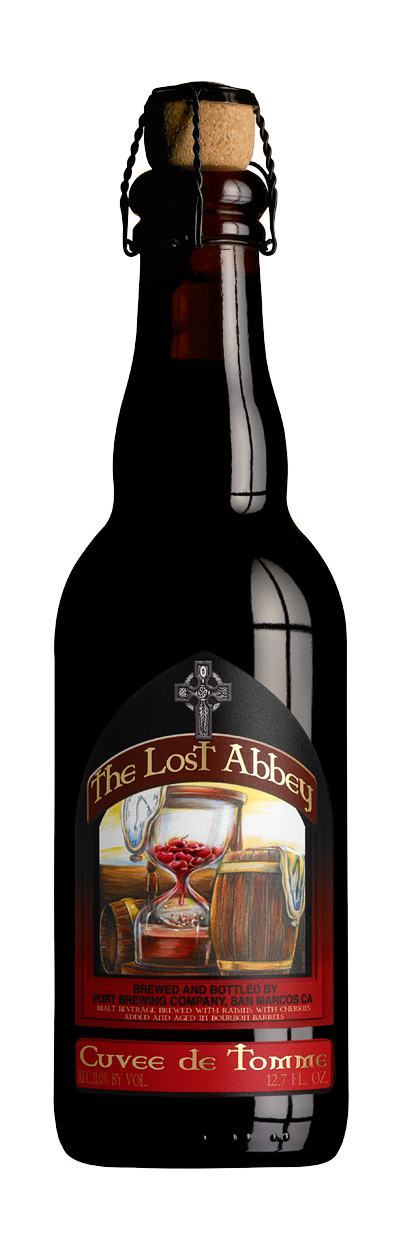
Cuvee bottle shot
The second brown beer on the list today is Red Poppy. Like Cuvee this was a batch of beer that has its roots in Pizza Port development albeit it went by a different name. When first released around 2002 or 3, it was simply known as Le Woody Brune (there was previously just Le Woody which was a blond sour). With the success of Cuvee and a pipeline to used wine barrels, I thought it would be best to apply the lessons from Cuvee de Tomme to something more akin to Rodenbach. This meant a lower abv beer with less oak and overall malt impression.
The process was similar. An English Brown Ale base was fermented and split batched. Some went on tap and a portion headed to the barrels out behind the brewery. This beer was racked into red wine barrels, cherries were added and the necessary cultures to acidify the beer did the rest. We now had produced our second brown sour ale and starting to really understand the process.
With the move from Pizza Port to Lost Abbey in San Marcos, it was re-branded and given the name Red Poppy which is the banner it still flies under today.
Red Poppy was a work horse for our sour beer program in the earliest days and it became an annual release with great fanfare and success. It remains one of the most decorated beers from our Non Denominational line of beers.

Red Poppy bottle shot
The art direction is also one of the most unique here at The Lost Abbey. You see, for many years it was the only Lost Abbey label that was digitally created. The vision for our Red Poppy label was always sophisticated and tuxedo like (at tastings I often refer to it as Phantom of the Opera like). As such, Sean created a digital red poppy flower which was laid on a black base for the label. It was hit with a spot varnish giving the flower a very distinctive “Sheen.”
It also remains the only Lost Abbey label for which there is no back story. The goal was less is more and we always felt words would just get in the way. The other unique part of the story is the California Poppy is our state flower. It is related to the Red Poppy which is the symbol for honoring those who gave their blood for our countries. The flower in embraced by those in Flanders who saw so much devastation in WW1. It’s the subject of the war poem “In Flanders Fields.” It’s a beer heaving with symbolism and meaning. But simply put, I have always been struck by the simple beauty of this label. It’s quiet and reverent at once.
That’s it for now. These beers have so many fond memories so we thought we’d color in the lines with a few interesting links. If you’ve never spent any time listening to Michael Jackson (The Bard of Beer) you’re in for a treat. Hard to believe this footage even exists! Cheers.
Still Friends After All These Years — The Hunt for the Microbes Behind America’s First Sour Beers
